
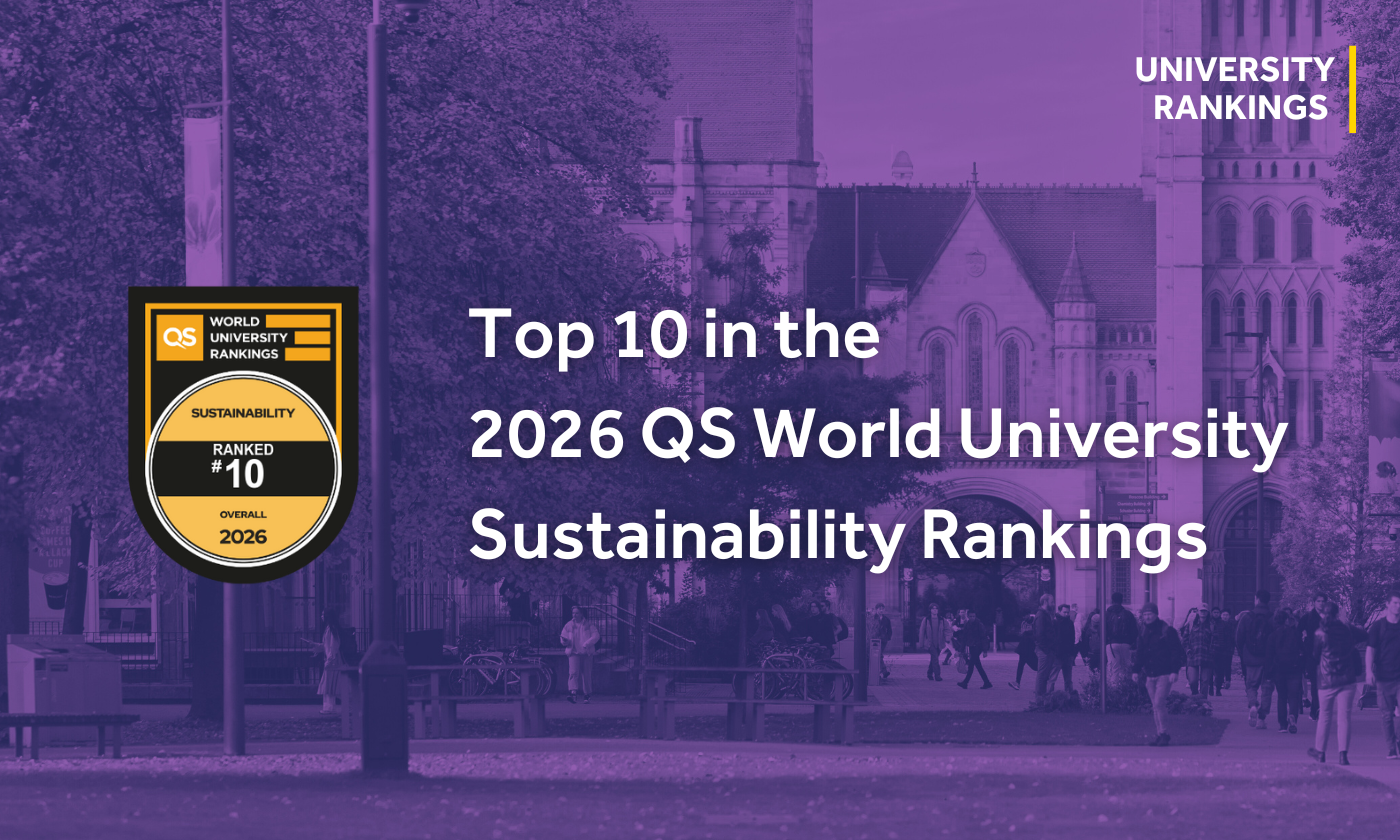
The University has been recognised among the world’s most sustainability-driven institutions.
With an overall score of 98 out of 100, Manchester is now 10th globally and 5th in the UK in recognition of its ability to tackle the world’s greatest environmental, social and governance (ESG) challenges – a shift from 9th and 4th respectively last year.
The University remains the only university in the world to feature in the top 10 of both the QS Sustainability Rankings and the Times Higher Education (THE) Impact Rankings.
About the QS Rankings
Now in the fourth year, this year’s QS assessment is its most comprehensive yet, evaluating 2,002 universities, compared with 1,745 in 2024. It assesses Universities’ commitment to sustainability, evaluating them on everything from the impact that alumni are making in science and technology to solve climate issues, to the impact of research being done across the UN’s 17 Sustainable Development Goals (SDG). It evaluates the social and environmental impact of universities as a centres of education and research, as well as a major employers with the operational sustainability challenges of any large and complex organisation.
What are we doing to make an impact?
The University has placed social responsibility as one of five foundations in its new strategy From Manchester for the world, and as one of the world’s leading research institutions, is driving global change through groundbreaking research, teaching, community engagement and responsible campus operations:
- In the past five years alone, Manchester academics have produced more than 21,500 SDG-related research publications, accounting for 4% of all UK research on the goals.
- Working with cultural institutions including Manchester Museum, the Whitworth, Jodrell Bank Discovery Centre and the John Rylands Research Institute and Library, the University aims to involve and inspire local and global communities with the SDGs.
- Earlier this year, the University begun powering its campus with clean, renewable electricity from a major new solar farm, which means that up to 65% of the University’s electricity demand will now be met from exclusive ‘new-to-earth’ renewable infrastructure. The move will reduce University carbon emissions by 12,000 tonnes of CO2e each year – enough to power 21 enough to power 21,000 homes.
“This fantastic achievement is the result of the collective efforts of our staff, students and partners, all working to embed our commitment to social and environmental impact into everything we do. While we know there is still much more to be done, we are proud of this assessment by QS and remain determined to continue to lead by example.”
Dr Julian Skyrme, Director of Social Responsibility, The University of Manchester