
The University of Manchester has in its 200 years produced many esteemed names among its alumni, but while not all of us will go onto the global fame of Norman Foster or Benedict Cumberbatch, nor the Nobel winning renown of John Polyani or Joseph Thomson, the University of Manchester has so many unsung alumni who lived fascinating, inspirational lives.
Esther Roper
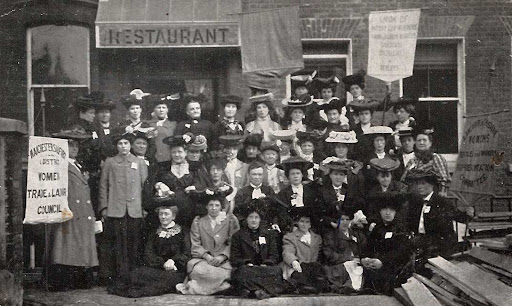
While Manchester’s links with the suffrage movement are well known, Esther Roper (English Literature, Political Economy and Latin, 1891) is an alumnus whose significance has sadly been eclipsed by her more famous peers. One of the first women to matriculate at Owen’s College, and only admitted as part of a trial to see if higher education wasn’t a “threat to women’s health”, she was an active member of the Manchester National Society for Women’s Suffrage, and lead its efforts to recruit outside the middle-classes that had hitherto dominated it, recruiting working-class women to the cause. She founded the first campaign to elect a woman to parliament, and organised circus performers, flower sellers, bar-maids and female coal workers to campaign against morality legislation that sort to drive them out of work. After meeting her life-long partner Eva Gore-Booth, the couple founded the Women’s Labour News and (with trans friend Irene Clark) Urania, the UK’s first LGBTQ+ publication.
Eric Laithwaite
Eric Laithwaite (Electrical Engineering, 1950) was demobilised RAF pilot when he joined the University of Manchester in 1946. As well as working on the Manchester Mark I computer, he invented the Magnetic Levitation Railway (Maglev), the linear induction motor and a device for generating electricity from waves. His rejection of scientific orthodoxy and unusual ideas around moths and gyroscopes lead him into conflict with the scientific community, but it could be argued that some of them were simply ahead of their time, as only now are ideas like wave power and maglevs reaching commercial application.
Linda Norgrove
I sadder story is that of Linda Norgrove (PhD Development Policy and Management, 2002), killed in fighting between the Taliban and US Navy SEALS in Afghanistan’s Korangal Valley in 2010. Prior to being kidnapped she had been working for a development agency, and it was international development and humanitarian relief work that was her life-long passion. Brought up on the Isle of Lewis in Scotland, she worked in Laos, Mexico and Uganda. She was posthumously awarded the Robert Burns Humanitarian award in 2011, and the Linda Norgrove Foundation was founded in her memory to continue to fund projects for women and girls in Afghanistan.
While not as well known as many of the alumni of the UoM, these three lives tell a story that I think is important to remember. That whatever we have done at university we have within us the potential to follow our passions to a rewarding and interesting life, to make the world a better place, and to contribute something to society, whether we’re widely celebrated for it or not. I’ll be trying to take the maverick spirit of these three less known Manchester alumni into what comes next in my life.