
A general election is an opportunity for people in every part of the UK to choose their Member of Parliament (or MP). This person will represent a local area in the House of Commons for up to five years. There’s a choice of several candidates in each constituency, and the candidate that receives the most votes becomes their MP.
The student vote has the potential to profoundly change UK politics. So, we’ve got the answers to frequently asked questions on voting as a student and this guide will run through everything you need to know so far.
| Register to vote now! Registering to vote online is simple and only takes around 5 minutes – all you need is your National Insurance number. You must be registered to be able to vote in a general election – register here. |
When will the general election take place?
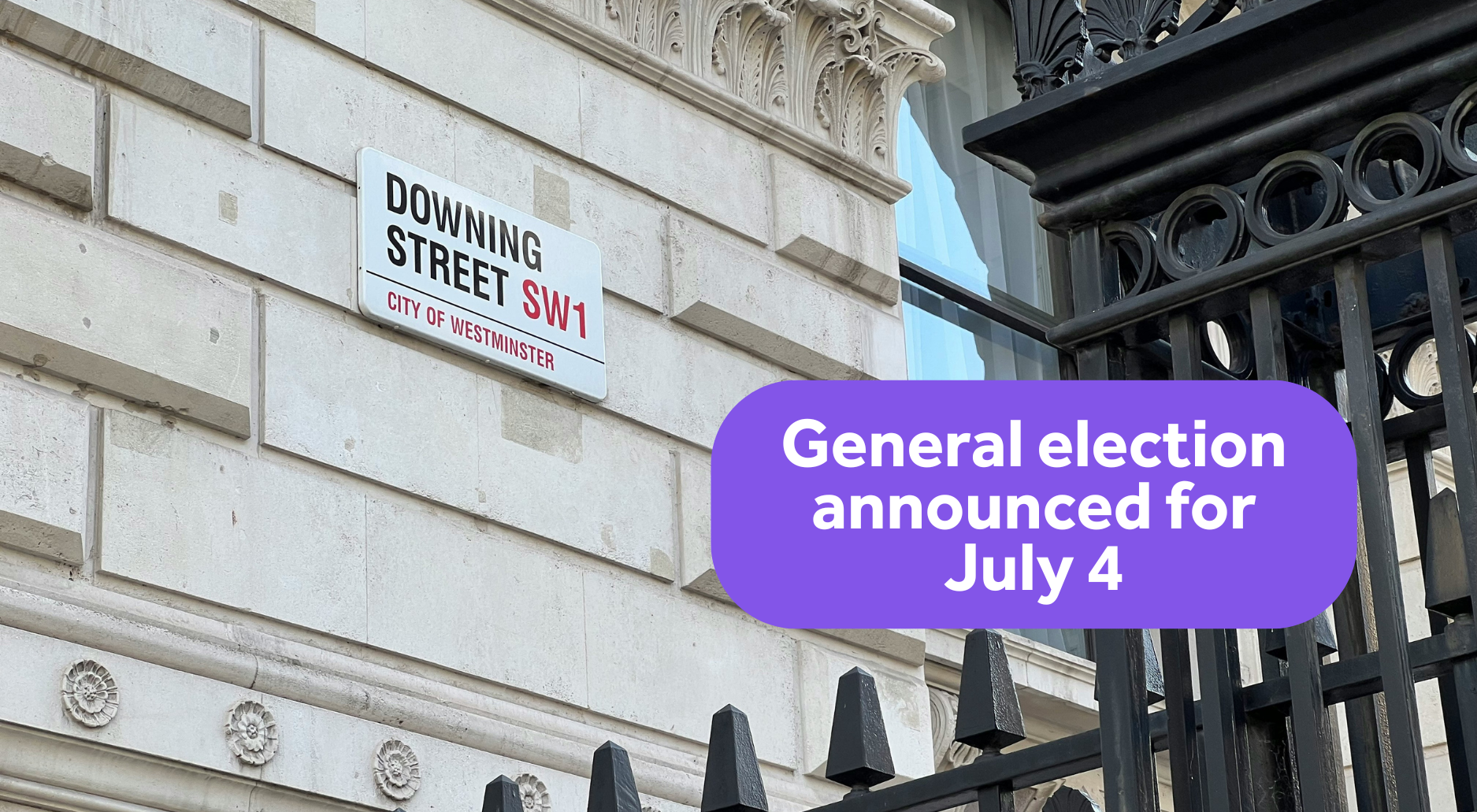
Prime minister Rishi Sunak has called a UK general election for 4 July – on a Thursday as is tradition.
How does a general election work?
The UK is divided into 650 areas, called constituencies. Each area has an MP, who represents it in the House of Commons in London. So, a general election is really 650 individual elections that all happen on one day, across England, Wales, Scotland and Northern Ireland.
On election day, people go to their local polling station to vote and receive a ballot paper, which lists all the candidates. Each person can cast one vote, by marking the ballot paper with a cross next to the name of the candidate they most want to represent them. The candidate who gets more votes than anyone else becomes the MP for that area. This is called first past the post, and that candidate wins a seat in the House of Commons.
How is a general election won?
To win, a political party needs to reach 326 MPs – which is half of all of them plus one. If a political party manages to do this, they win an overall majority, as they’ve won more seats than all of the other parties combined.
When there’s no clear winner – in other words, no political party wins more seats that all the other parties put together – this is what is called a hung parliament. If this happens, there are two options. Firstly, the bigger parties can try to join up with another party so that together they have 326 or more seats and create a government together. This is called a coalition government.
Secondly, if the party that won the most MPs (but without getting an overall majority) does not want to join with another party like this, they can try to rule as a minority government. They can work to reach agreements with other political parties to support them in parliament, or seek out support from other MPs for what they want to do as they go along.
What will happen to parliament?
There are usually a few days after an election is called and parliament is dissolved – or prorogued – before dissolution. Dissolution is the official term for the end of a parliament. Sunak has said parliament would end on 30 May. Any remaining legislation must be passed in the coming days, and bills that do not make it will be abandoned as they cannot be carried over.
After parliament is dissolved, MPs will return to their constituencies to begin campaigning – acting no longer as MPs but as parliamentary candidates.
When will the manifestos be launched?
The parties tend to publish their document setting out their policies and what they plan to do if they are voted into power about three to four weeks before polling day, to make sure they are fresh in voters’ minds.
What does a Member of Parliament (MP) do?
The UK public elects MPs to represent their interests and concerns in the House of Commons. MPs consider and can propose new laws as well as raising issues that matter to you in the House. This includes asking government ministers questions about current issues including those which affect local constituents.
Who are the candidates in my constituency?
After the deadline for nominations has passed, a list of the candidates who are standing – or ‘Statement of Persons Nominated’ – will usually be posted on your local authority website. You can find official election information for your area on the Electoral Commission website.
You can also find out about candidates in your area on the ‘Who Can I Vote For?’ website.
What happens on polling day?
The polls open at 7am and close at 10pm. After voting has closed an exit poll will be published, which tends to correctly predict the result. The results from each constituency start to be released throughout the night. By morning, it is usually clear who the winner is, with the prime minister either resigning or staying in office.
You don’t need to bring your polling card with you, but you will be required to show valid voter ID. If you don’t have an acceptable form of photo ID, you can apply for a free voter ID document, known as a Voter Authority Certificate.
Voting as a student FAQs
How do I register to vote?
As a student, you are usually able to register to vote at both your home and term-time addresses. You are able to vote in both places for local elections if your two addresses are in different local authority areas, however you must choose one location for a general election. Register here.
How do I check if I’m already registered?
You can check with your local authority to see if you are already registered. If you voted in local elections and haven’t moved then you’re probably already registered, however any change of term time address will mean you will need to re-register to vote.
How do I vote?
In person: If you choose to vote in person, you’ll need to go to the polling station allocated to you. This is based on your address on the electoral register. Your polling station will be on your poll card, which you’ll receive through the post a few weeks before polling day. Find your local polling station here.
Voting by post: If you aren’t able to get to your polling station on polling day you can vote by post. To do this, you will need to apply in advance for a postal vote application form.
Voting by proxy: You can ask someone you trust to cast your vote for you if you’re not able to attend a polling station. This is called a proxy vote. If you nominate a proxy, the person you choose to vote on your behalf will need to show their own photo ID to cast your vote. They will not need to show your ID. Find out how to vote by proxy.
I’m an international student – can I vote?
As an international student you may be thinking that elections are not relevant to you and you’re not able to vote. However, depending on nationality and citizenship you might be surprised to find out that you are in fact eligible to vote in the UK. To vote in a general election you should:
- be at least 18 years old or above
- have British or Irish citizenship
- or have Commonwealth citizenship who has valid immigration permission/Leave to Remain for the UK/does not need it for the UK/who is resident in the UK. (This includes citizens of the Channel Islands (British Crown Dependencies), the Isle of Man and British Overseas Territories)
- If you are former resident of Hong Kong who holds a British Dependent Territories, British National Overseas (BNO) or British Overseas passport, you are also eligible to vote
- Citizens of Cyprus and Malta are eligible to vote
- Citizens of Fiji and Zimbabwe retain their voting rights, despite their countries having being suspended from the Commonwealth