
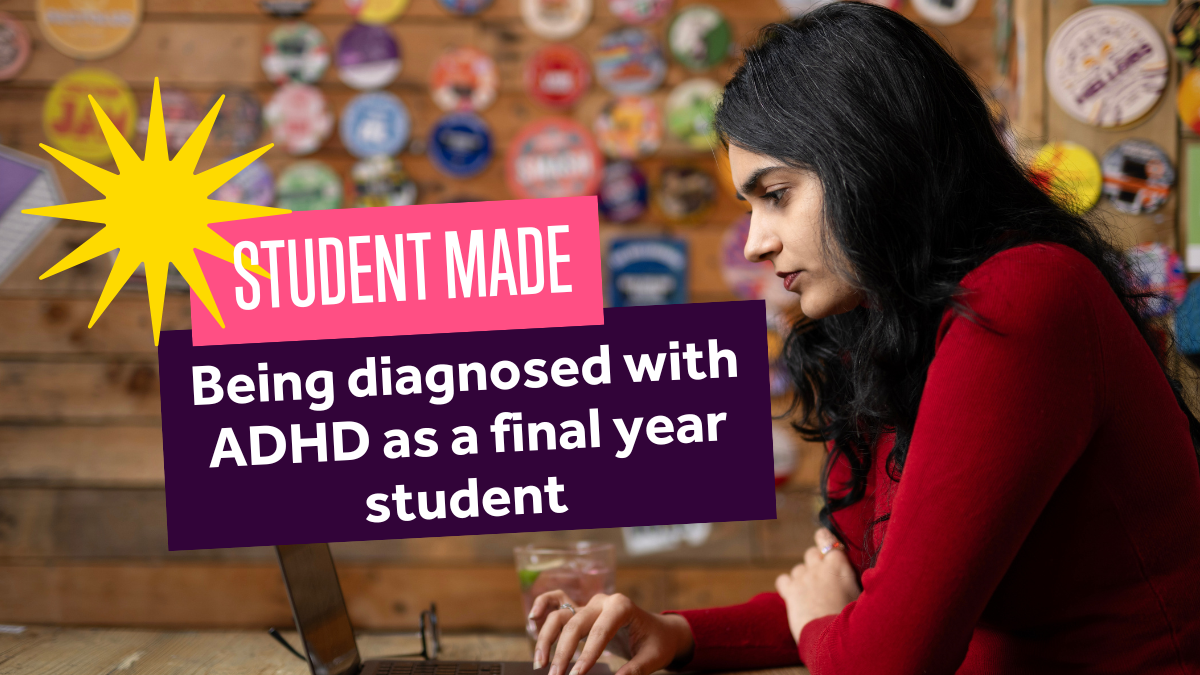
When I opened up to the closest people in my life over the summer about wanting to pursue an ADHD diagnosis so late into my undergraduate studies and as an adult, I received two very distinct reactions. One half of my friends said, “You probably do have ADHD, but you’ve been fine up to now,” while others said, “You’ve been fine up to now, so you don’t have ADHD.” Despite their differences, both shared a common opinion: I shouldn’t bother. I felt caught between these two perspectives, unsure of what to do.
Pursuing a diagnosis can feel emotionally daunting. There are so many misconceptions surrounding neurodivergence. I started to think: What if I’m just confused? What if my struggles are simply the result of TikTok, social media, or modern distractions? But the reality is: whatever it was, it was impacting my life enough that I wanted answers. Seeking a diagnosis can also feel physically daunting, like a complicated and gruelling process, far beyond reach. To be honest, it is an ironically long-winded system, requiring organisation, patience, and constant follow-up in order to diagnose a condition defined by struggling with exactly those things.
In my final year of university, and as an adult, I finally received confirmation that helped me understand so many aspects of my life. I wasn’t lazy, or unambitious; instead, I discovered the reason behind behaviours that I once thought I would just outgrow with time. I felt genuine relief in finally being able to understand a part of myself after so many years—especially as a woman, where neurodivergence is often underdiagnosed or overlooked compared to men, and coming from an ethnic family background in which neurodivergence is frequently treated as taboo and seeking a diagnosis is actively discouraged.
This diagnosis allowed me to begin actively seeking support, from exploring treatment options and therapy to accessing university systems. Final year feels scary because it isn’t only about my studies, but also about transitioning, applying to jobs, and the pressures of thinking several steps ahead. Having a formal diagnosis helped me to access further support and, just as importantly, to stop minimising my struggles. I feel incredibly lucky to study at a university with such a comprehensive disability services team. In my case, I was given a personalised support plan outlining adjustments that would not only help me academically but also make it easier to manage other areas of my life that had previously felt unstructured or overwhelming.
If you’re questioning whether your struggles are “serious enough” to ask for help, they probably are, and you deserve support at any stage of your life. Speaking to DASS can be a helpful first step; it’s never too late to understand yourself better!