
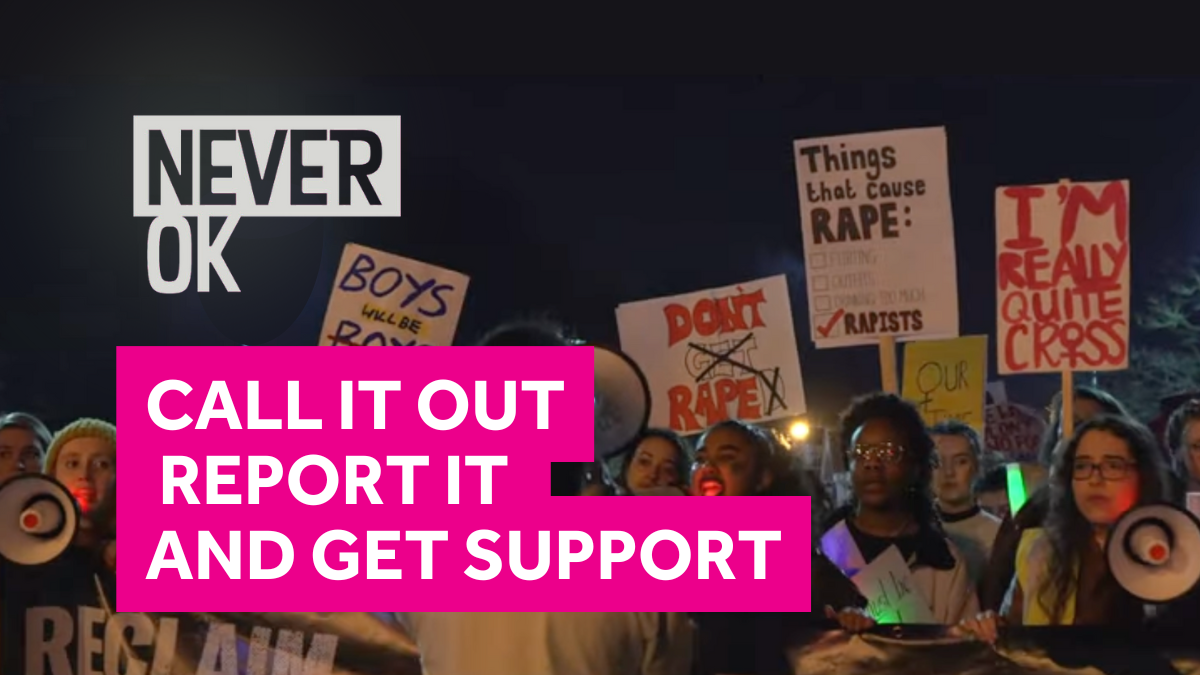
Never OK is a collaborative campaign by The University of Manchester, Manchester Metropolitan University, and the University of Salford. Together, we are committed to creating a culture where sexual harassment and gender-based violence are never tolerated.
Never OK provides you with the tools, knowledge, and confidence to take action against sexual harassment.
It encourages everyone to become active bystanders by challenging unacceptable behaviour when they see it. Empowering survivors of sexual harassment or violence to seek support and feel confident about reporting incidents.
What can you do?
At The University of Manchester, we’re asking everyone to:
🧠 Educate yourself about sexual harassment
Sexual harassment includes any form of unwanted sexual behaviour that causes someone to feel upset, scared, offended, or humiliated. This applies whether it occurs in person or online, regardless of the intent behind it.
Examples of sexual harassment include:
- Catcalling or wolf-whistling
- Leering, staring, or making suggestive looks
- Sexual “jokes” or banter
- Unwanted sexual advances or flirting
- Sending sexts or explicit images without consent
Our universities have a zero-tolerance stance on sexual harassment and violence. We take all reports seriously. To foster a respectful and safe community, we encourage everyone to complete the Understanding Consent module. This online resource explains the importance of consent and how to recognize inappropriate behavior.
🗣️ Become an active bystander
Being an active bystander means recognizing inappropriate or threatening behavior and choosing to step in or support someone in need. Research shows that bystander intervention can effectively prevent sexual harassment and violence before they escalate.
Here are four ways to intervene safely:
- Direct: Address the behavior directly by telling the person it’s not okay (if it’s safe to do so).
- Distract: Disrupt the situation, such as spilling a drink or asking a random question to diffuse tension.
- Delegate: Get help from someone else, like a friend, venue staff, or the police.
- Delay: If you can’t intervene in the moment, check in with the person afterward to offer support.
By calling out unacceptable behavior, we can all contribute to a safer and more respectful community.
🚨 Report incidents and seek support
We understand that many instances of sexual harassment go unreported for various reasons. If you’ve experienced sexual harassment, know that it is never your fault. Support and guidance are available to help you navigate what to do next.
Reporting incidents allows you to access to specialist support and gives you the option to engage with a formal reporting process. All reports are taken seriously, and we will support you throughout the process.
Ways to report and access support:
- To the police: Call 999 in an emergency or if you’re in danger. For non-emergencies, call 101, visit a local police station, or report online.
- Report + Support website: Use this platform to report incidents to the University, either anonymously or with your contact details. It also provides information on available support services.